Why Did I Receive A Backflow Testing Notice?
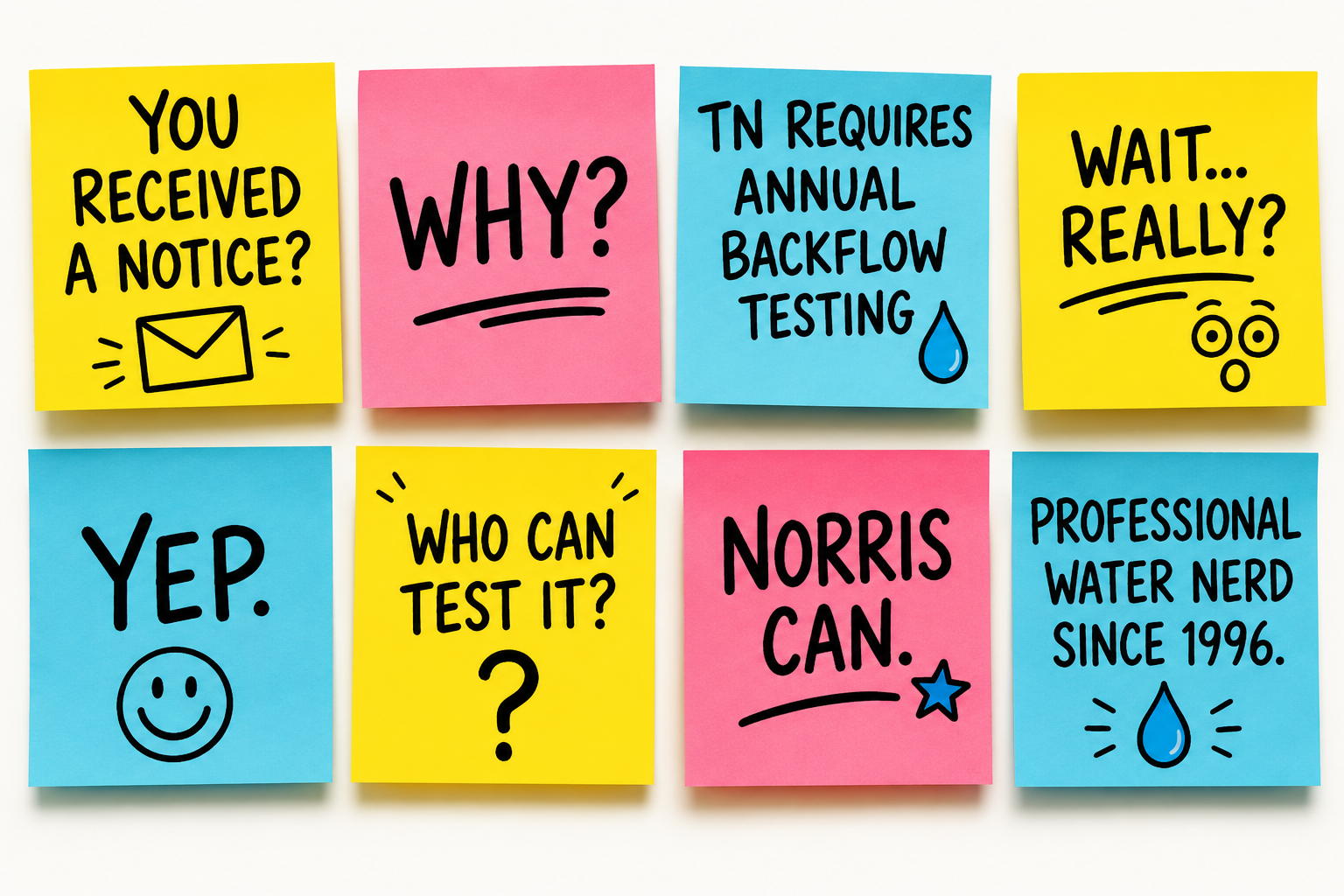
You open the mail and see a notice from your water provider stating that your backflow preventer requires testing.
If you've never received one before, your first reaction is often:
"Wait... what is a backflow preventer?"
Or:
"Why am I receiving this now?"
The good news is that receiving a backflow testing notice does not mean something is wrong.
In most cases, it simply means your annual backflow test is due.
Why Are Backflow Preventers Required?
Backflow preventers are devices installed on Tennessee irrigation systems, agricultural meters, and certain commercial water services.
Their purpose is to help protect the public water supply by preventing water from flowing backward into the system from potential cross-connections.
Because these devices play an important role in protecting drinking water, many utility districts and water providers require yearly testing to verify that they are functioning properly.
Why Did My Water Provider Send Me A Notice?
Tennessee water providers maintain records of properties that have backflow preventers connected to their systems.
When annual testing is required, the water provider sends a notice reminding property owners that their device is due for testing.
This is a normal part of the compliance process and is intended to help ensure required testing is completed on time.
Do All Properties Require Backflow Testing?
Not all properties have a backflow preventer.
However, annual testing is commonly required for:
Irrigation systems
Agricultural meters
Certain commercial properties
HOAs and multi-property communities
Other water services where backflow protection is required
Requirements can vary depending on your utility district and property type.
What Happens During A Backflow Test?
A certified backflow tester performs a series of tests to verify that the device is operating properly and meeting applicable requirements.
Most residential tests can often be completed in less than 30 minutes.
Commercial properties with multiple devices may require additional time depending on the number of assemblies being tested.
What Happens If My Backflow Preventer Fails?
A failed test does not automatically mean the device must be replaced.
In many cases, cleaning, repairs, or rebuilding may restore proper operation.
If the device has been damaged or can no longer be repaired economically, replacement may be recommended.
An experienced backflow professional can help determine the most appropriate solution.
Why Experience Matters
Backflow testing is only one part of the process.
If a device fails, understanding repair options, replacement requirements, installation standards, and utility district expectations can help property owners avoid unnecessary costs and delays.
Livingwater brings:
33 Years Installing Backflow Systems
26 Years Repairing Backflow Systems
7 Years Certified Backflow Testing Experience
for residential and commercial customers throughout Chattanooga, TN, Signal Mountain, TN, Lookout Mountain, TN, Middle, East and Southeast Tennessee.
What Should I Do Next?
If you've received a backflow testing notice, the next step is simply to schedule your annual test with a certified backflow tester.
The notice does not necessarily indicate a problem.
In most cases, it means your required annual test is due.
Scheduling your test promptly helps maintain compliance and ensures your backflow preventer continues operating properly.
Need To Schedule A Backflow Test?
Livingwater provides certified backflow testing throughout Tennessee, along with backflow repair, installation, relocation, and replacement services.
📞 Call (423) 509-3390
Norris will be happy to answer your questions and help determine the best solution for your property.
Related Backflow Resources:
• Who Can Perform Backflow Testing In Tennessee?
• What Happens If My Backflow Preventer Fails Inspection?
• Backflow Testing, Repair, Installation & Relocation Services